A place where new and old meet
It was story that remained buried until 1992, when a couple of joggers spotted the skull of an old skeleton while out on their morning jog.
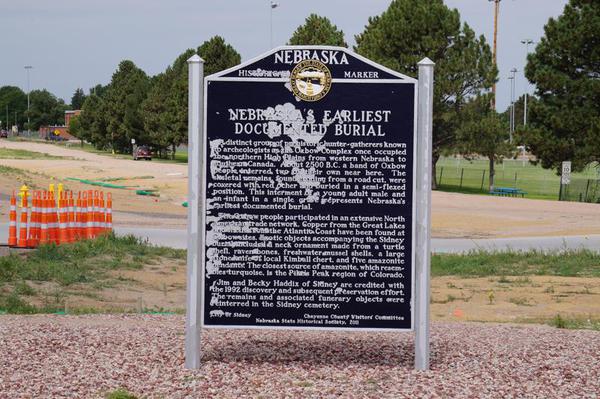
According to the Nebraska Historical Society, the discovery and preservation are credited to Jim and Becky Haddix of Sidney.
After finding the bones, the Haddixes notified authorities and an archeologist was called in to identify and exhume the body, Kathy Wilson with the Boothill Committee said.
Upon further investigation it was determined that the bones of an adult male and an infant were interred in a single grave, covered in a natural earth pigment called red ocher.
"The remains were sent off to the University of Nebraska,Omaha Sociology & Anthropology department," Cemetery Sexton, Don Gehrig said.
According to Archeologist Kevin Hammond, the bones themselves were more than five thousand years old, and were from the prehistoric hunter-gatherers known as the Oxbow Complex, who once occupied the northern High Plains from western Nebraska to southern Canada. The skeletal remains, found eroding from a road cut, represent Nebraska's earliest documented burial.
According to the Nebraska Historical Society, the discovery and preservation are credited to Jim and Becky Haddix of Sidney.
After finding the bones, the Haddixes notified authorities and an archeologist was called in to identify and exhume the body, Kathy Wilson with the Boothill Committee said.
Upon further investigation it was determined that the bones of an adult male and an infant were interred in a single grave, covered in a natural earth pigment called red ocher.
"The remains were sent off to the University of Nebraska,Omaha Sociology & Anthropology department," Cemetery Sexton, Don Gehrig said.
According to Archeologist Kevin Hammond, the bones themselves were more than five thousand years old, and were from the prehistoric hunter-gatherers known as the Oxbow Complex, who once occupied the northern High Plains from western Nebraska to southern Canada. The skeletal remains, found eroding from a road cut, represent Nebraska's earliest documented burial.